
The Income Tax department Saturday issued an advisory that those permanent account numbers (PAN) which are not linked with Aadhaar by the end of March next year will be rendered "inoperative". "What is mandatory, is necessary. Don't delay, link it today!" the department said in a public advisory. "As per Income-tax Act, 1961, it is mandatory for all PAN holders, who do not fall under the exempt category, to link their PAN with Aadhaar before 31.3.2023. From 1.04.2023, the unlinked PAN shall become inoperative," it said.
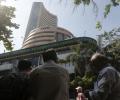
Top gainers in the Sensex pack included Infosys, Bajaj Finance, Maruti, HUL, HCL Tech and Reliance Industries, while M&M, IndusInd Bank, ITC, PowerGrid and L&T were among the losers. The NSE Nifty settled 190.80 points, or 2.51 per cent, down at 7,801.05.

Traders are waiting for the earnings season to kick off.

Searches conducted by the Enforcement Directorate (ED) under the anti-money laundering law rose by 86 times while arrests and attachment of assets jumped by around 25 times in the 10 years since 2014 compared to the preceding nine-year period, according to official data.

If the concerns over risking political capital are overcome, the long-term gains for the Indian economy will be immense, asserts A K Bhattacharya.

Consumer prices were forecast to have risen 10.00 per cent annually last month, barely changed from the 10.09 per cent clocked in October.

If they will allow I will speak inside the parliament, the Wayanad MP said.

The former Union minister joined the UPA after holding talks with the Congress leadership.

The next round of bad news could come from Europe, where banks in a number of economies such as Italy, Portugal and Greece are sitting on mountains of bad loans.
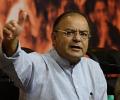
FM says government policies aim to contain inflation, spur growth.

The Enforcement Directorate has arrested four persons including the MD of the Lava International mobile company and a Chinese national as part of its ongoing money-laundering probe against Chinese smartphone-maker Vivo, official sources said on Tuesday. They identified the four as Hari Om Rai, the MD of Lava International company, Chinese national Guangwen Kyang, chartered accountant Nitin Garg and a person called Rajan Malik. They have been taken into custody under the provisions of the Prevention of Money Laundering Act (PMLA).

'The Budget that Mr Jaitley will present on February 29 will be crucial.'

If the impact of the Greece crisis spreads across Europe and parts of the world which are more interconnected than ever before, India cannot hope to be insulated, says Paranjoy Guha Thakurta.
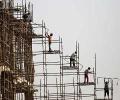
The optimism in global markets could help India as the rebound in GDP is expected to continue and get more broad-based.

India will need an annual investment of Rs 15 trillion in infrastructure over the next five years, says Chandrajit Banerjee, DG, CII.

Corporate India at present is more indebted than all state govts put together.

After Raghuram Rajan leaves, the world for the succeeding RBI governors will be distinctly different.

The stakes are significant for the BJP in this round as the party had in 2019 won an overwhelming majority of these seats, including all in Gujarat, Chhattisgarh, Bihar and Madhya Pradesh, that will go to polls on May 7.
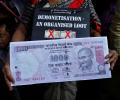
In a big win for the Narendra Modi government, the Supreme Court in a 4:1 majority verdict on Monday gave its stamp of approval to the Centre's 2016 decision to demonetise the Rs 1,000 and Rs 500 denomination currency notes, saying the decision-making process was neither flawed nor hasty.

The World Bank's latest review of its purchasing power parity (PPP) baseline will reignite the poverty debate.

The pre-Budget proposals sent to the finance ministry aim to bring uniformity in tax treatment for investments in different financial sectors, mitigate hardship to retail taxpayers, and encourage participation in mutual funds.

Ajit Mishra, vice president, Research, Religare Broking, answers your queries.

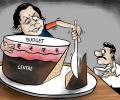
Finance Minister Nirmala Sitharaman will present the Union Budget for 2023-24 in Parliament on February 1. The Budget is a statement of the government's estimated receipts and expenditures for a fiscal year (April 1 to March 31). It's divided into Revenue and Capital Budget. The Revenue Budget includes the government's revenue receipts and expenditures while the Capital Budget includes its capital receipts and payments.

In its complaint against Shah, the Congress told the EC that the home minister claimed in a speech in Chhattisgarh's Rajnandgaon on October 16 that "...Bhupesh Baghel's government, for appeasement politics and vote bank politics, lynched Chhattisgarh's son Bhuneshwar Sahoo and got him killed..."

'The government will carefully regulate and monitor the Digital Rupee, and because the currency is supposed to be tied to INR or supported by reserves, we should expect little fluctuation in pricing.'

The Union home ministry issued a notification, announcing the formation of the tribunal.

India plans to phase in cash transfers of food and kerosene subsidies from September, saving 10-15 per cent of the $21 billion in annual outlays on the benefits by eliminating fraud, a senior finance ministry official said on Thursday.

The company's India focus hasn't changed with the change in CEOs.


The Reserve Bank of India, which mainly factors in retail inflation to decide its monetary policy, has been tasked by the government to ensure the rate of price rise remains around 4 per cent.

Hard and unpopular decisions are needed - not just another round of financial repackaging to sort out the discom mess.

Struggling to gain political traction on issues of corruption, the West Bengal Bharatiya Janata Party is shifting its focus to emotive topics such as the Ram Temple in Ayodhya and the Citizenship Amendment Act (CAA) in a bid to achieve its target of securing 35 out of the 42 Lok Sabha seats from the state.
Niti Aayog will prepare the next list of central public sector companies for disinvestment in the next few weeks, its vice chairman Rajiv Kumar said on Thursday and expressed hope that the proposed asset reconstruction and management companies to address banks' bad loan woes will do a good job like the UTI. Days after Finance Minister Nirmala Sitharaman announced the Union Budget for 2021-22 laying out various measures (including disinvestment proposals) to bolster the pandemic-hit economy, Kumar also emphasised that the Modi government has shown consistent commitment for the welfare of farmers and for the improvement of the agriculture sector. "Now the process has begun... We will complete preparation of the next list in the next few weeks, we have got the marching order," Kumar said about the list of public sector companies for the next round of stake sales.
The specifics will also cover what's fit and proper to be a chest manager; the insurance and re-insurance aspects; and the new capital threshold, which is Rs 100 crore now.
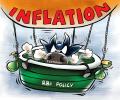
Currently, the retail inflation is well below the RBI's comfort level. The government has asked the central bank to keep inflation in the range of 4 per cent.

The deficit stood over Rs 8 trillion in the first seven months of the current financial year. Non-tax revenues, comprising transfers from the RBI and dividends of the public sector units, shored up the Centre's revenues.

The CBI, in its FIR, alleged that Mayaram, the UK-based company De La Rue International Ltd and unidentified officials of the finance ministry and RBI hatched a criminal conspiracy to extend undue favour to the firm.

The statement, issued after the 2-day meeting of the 6-member Monetary Policy Committee of the Reserve Bank of India, also said that recapitalisation of public sector banks along with resolution of stressed assets under the Insolvency and Bankruptcy Code (IBC) will create demand for fresh investments.

She said I treated her like a bachchi. At another moment, she said I had gone to various people and 'bitched' about her. She also threatened to bring the entire matter to the PM's notice. A revealing excerpt from Subhash Chandra Garg's We Also Make Policy: An Insider's Account of How the Finance Ministry Functions.

Bankers said high interest rate could make Indian economy sluggish given that inflation is around 5%
